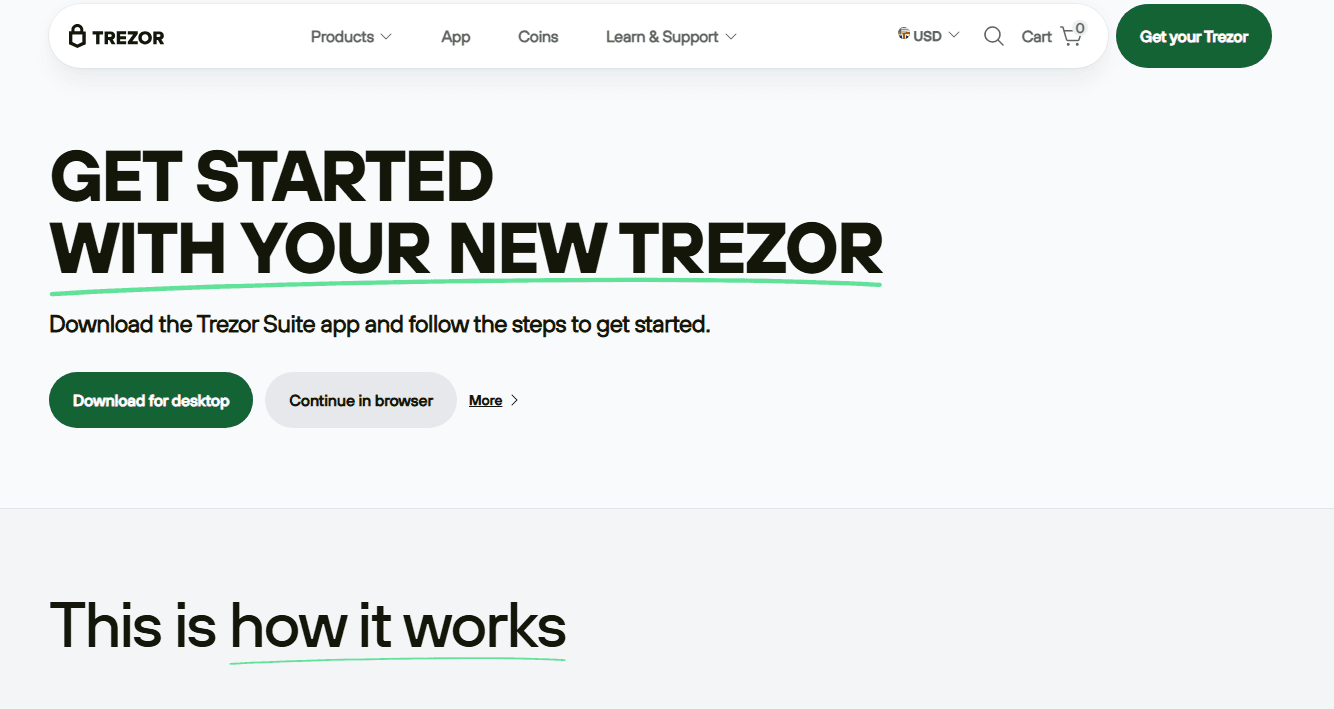
Trezor.io/start: The Complete Guide to Setting Up Your Trezor Wallet
As cryptocurrencies become mainstream, safeguarding digital assets is paramount. Trezor is a leading hardware wallet that provides a highly secure method to store, manage, and transact cryptocurrencies. The Trezor wallet is designed to keep private keys offline while providing a user-friendly interface through Trezor Suite or compatible software.
The Trezor onboarding process starts at Trezor.io/start, which guides users through setup, device initialization, recovery, and secure access. This comprehensive guide will walk you through Trezor.io/start, including step-by-step instructions, security features, troubleshooting tips, and best practices to ensure your crypto assets remain protected.
What Is Trezor.io/start?
Trezor.io/start is the official web portal provided by SatoshiLabs, the company behind Trezor wallets. It is the starting point for new and existing Trezor users to:
Initialize a new Trezor device
Restore an existing wallet using a recovery seed
Install Trezor Suite, the desktop and mobile interface for managing cryptocurrencies
Access setup guides, tutorials, and security instructions
The portal ensures that users are guided through the setup process securely, avoiding phishing or fraudulent websites.
Trezor Wallet Models Supported
Trezor.io/start supports both major Trezor models:
Trezor One: Entry-level hardware wallet suitable for storing multiple cryptocurrencies with a simple interface.
Trezor Model T: Advanced model with a touchscreen, support for more coins, and additional features such as Shamir Backup.
Regardless of the model, Trezor.io/start provides step-by-step guidance to get your device operational in a secure environment.
Step-by-Step Guide to Trezor.io/start
Step 1: Visit Trezor.io/start
Go to Trezor.io/start using a secure browser.
Ensure the website uses HTTPS and that the domain is correct to avoid phishing attacks.
Choose your operating system to download Trezor Suite or connect to the web wallet interface.
Step 2: Connect Your Trezor Device
Connect the Trezor device to your computer or mobile device via USB.
If you are using Trezor Model T, the touchscreen will guide you through the setup.
Confirm that the device screen matches the instructions on the website.
Step 3: Install Trezor Suite
Trezor Suite is the official application for managing your Trezor wallet.
Download Trezor Suite for your operating system.
Install the application following on-screen instructions.
Launch Trezor Suite and connect your Trezor device.
Trezor Suite provides portfolio management, sending and receiving cryptocurrencies, and access to exchange features.
Step 4: Initialize the Device
When setting up a new device:
Choose “Create a New Wallet”.
The device will generate a recovery seed—a set of 12, 18, or 24 words, depending on the model.
Write down the recovery seed on the included card. Never store it digitally or online.
For Model T, you may also have the option to set up Shamir Backup, splitting your recovery seed into multiple parts for enhanced security.
Step 5: Set a PIN
Set a PIN code to secure the device.
Enter the PIN on the device screen directly; never type it on the computer keyboard.
Choose a code that is both memorable and complex enough to prevent unauthorized access.
Step 6: Backup and Verify Your Recovery Seed
After generating the recovery seed, the device will prompt you to verify it.
Confirm each word in the correct order.
Store the seed securely; it is the only way to recover your wallet if the device is lost, stolen, or damaged.
Step 7: Access Your Wallet
Once the setup is complete:
Use Trezor Suite to view your cryptocurrency portfolio.
Add accounts for supported cryptocurrencies.
Start sending, receiving, and staking crypto securely.
Security Features of Trezor.io/start and Trezor Wallets
Trezor wallets are designed with security as a priority. Key features include:
Offline Key Storage: Private keys never leave the device, preventing online attacks.
PIN Protection: A secure PIN prevents unauthorized access to the device.
Recovery Seed: Allows recovery of funds if the device is lost or stolen.
Passphrase Protection: Users can add an extra layer of security by setting a passphrase that combines with the recovery seed.
Open-Source Firmware: The firmware is transparent and regularly audited for vulnerabilities.
Shamir Backup (Model T): Splits the recovery seed into multiple shares for additional redundancy and security.
By following Trezor.io/start, users ensure these security features are properly enabled during setup.
Common Issues and Troubleshooting
Even with a guided setup, some users may face problems. Common issues include:
Device Not Recognized
Try a different USB port or cable.
Ensure the device is unlocked with the correct PIN.
Update Trezor Suite to the latest version.
Recovery Seed Mistakes
Verify each word carefully; mistakes can result in permanent loss of access.
Never take screenshots or store seeds digitally.
Firmware or Software Errors
Reinstall Trezor Suite if the application is unresponsive.
Update device firmware following instructions on Trezor.io/start.
Transaction Delays
Confirm network fees and cryptocurrency addresses.
Use blockchain explorers to check transaction status.
Best Practices for Using Trezor.io/start
Use Official Sources: Only use Trezor.io/start and verified downloads for setup.
Keep Recovery Seed Offline: Store in a safe location away from digital exposure.
Set Strong PINs and Passphrases: Ensure both device PINs and optional passphrases are secure.
Enable Firmware Updates: Regularly update Trezor firmware to patch vulnerabilities.
Verify Transactions: Always check addresses and amounts on the device screen.
Use Secure Networks: Avoid public Wi-Fi when accessing your wallet or conducting transactions.
Regularly Monitor Portfolio: Use Trezor Suite to track balances, staking, and transaction history.
Advantages of Using Trezor.io/start
Guided Setup: Step-by-step instructions reduce errors for beginners.
Maximum Security: Keeps private keys offline and provides PIN and passphrase protection.
Recovery Options: Easily restore wallets using the recovery seed or Shamir Backup.
Multi-Currency Support: Manage Bitcoin, Ethereum, and hundreds of other coins.
Open-Source Transparency: Regularly audited software ensures trust and reliability.
Using Trezor.io/start simplifies onboarding for both new and experienced cryptocurrency users, ensuring a secure start to crypto management.
Conclusion
Trezor.io/start is the essential first step for setting up a Trezor hardware wallet. From downloading Trezor Suite to initializing your device, generating a recovery seed, setting a PIN, and securing your wallet, the portal guides users safely through each step.
By following the instructions, enabling all security features, and adhering to best practices, users can protect their digital assets against hacks, loss, and theft. Trezor wallets provide unparalleled security, transparency, and usability, making them an excellent choice for anyone serious about cryptocurrency management.
Whether you are new to crypto or an experienced investor, Trezor.io/start ensures a safe, efficient, and secure setup process. With Trezor and Trezor Suite, managing, sending, receiving, and staking digital assets becomes a secure and user-friendly experience.