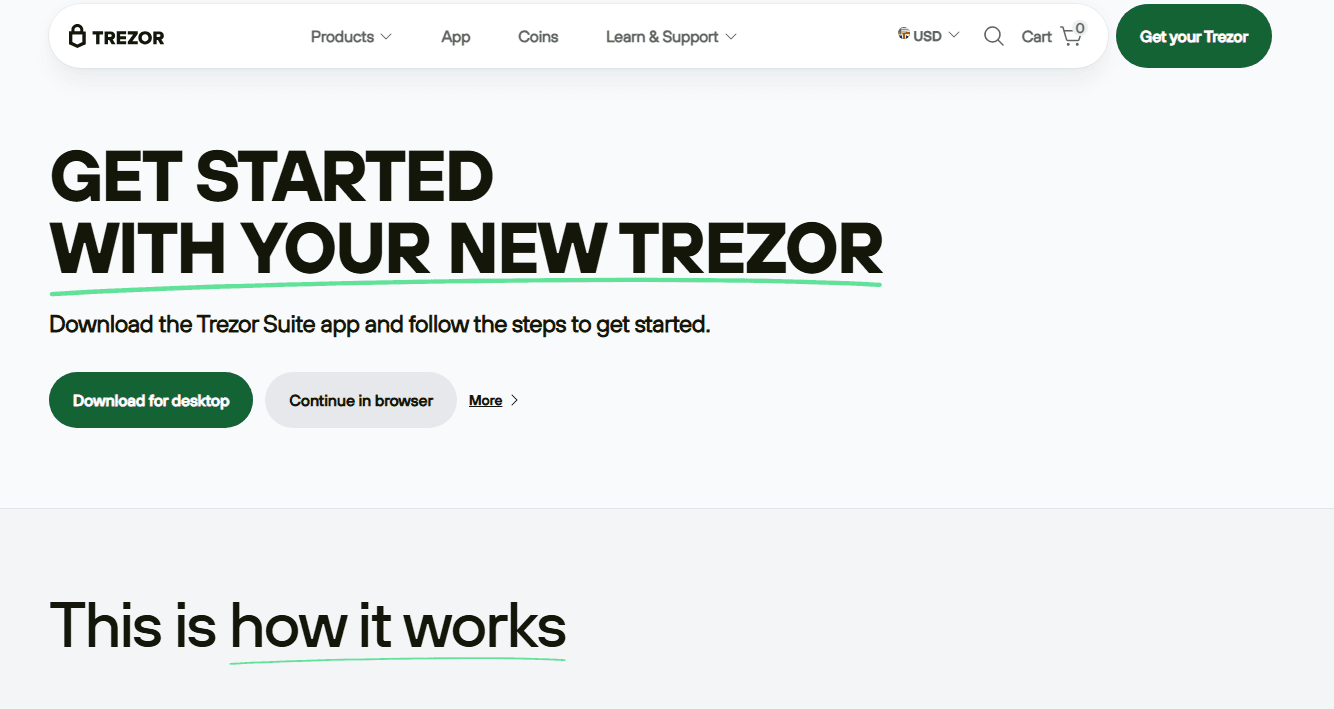
Trezor.io/start: Your Definitive 1200-Word Guide to Setting Up a Trezor Hardware Wallet
The world of cryptocurrency demands strong security, and hardware wallets remain the gold standard for protecting digital assets. Trezor, one of the first and most trusted hardware wallet manufacturers, provides a secure environment for storing crypto offline. Whether you own a Trezor One or a Trezor Model T, your setup journey officially begins at Trezor.io/start.
This guide provides a complete walkthrough of everything you need to know when visiting Trezor.io/start—including device initialization, seed phrase creation, PIN configuration, Trezor Suite installation, security tips, common issues, and best practices.
What Is Trezor.io/start and Why Is It Important?
Trezor.io/start is the official onboarding hub designed by SatoshiLabs to guide users through setting up their Trezor hardware wallet safely. By directing customers to a dedicated setup page, Trezor ensures:
You avoid fraudulent or phishing websites.
You receive the correct steps for your specific Trezor model.
Your wallet is configured securely from the beginning.
You download the official Trezor Suite app with confidence.
This page acts as a secure entry point to the Trezor ecosystem, reducing user errors and ensuring proper wallet configuration.
Before You Begin: What You Need
To start the setup process at Trezor.io/start, gather the following:
✔ Your Trezor Device
Either Trezor One or Trezor Model T.
✔ A Computer or Smartphone
Windows, macOS, Linux (for desktop)
Android (for mobile), or use USB-C for Model T
iOS does not support Trezor via browser, so you must use a computer.
✔ Secure Internet Connection
Avoid public or shared Wi-Fi during wallet setup.
✔ Pen and Paper
For writing down your recovery seed during setup.
✔ USB Cable
Ensure you use the original cable or one that supports data transfer.
Step-by-Step Setup Guide via Trezor.io/start
Step 1: Visit The Official Website
Start by typing the URL exactly as shown:
Trezor.io/start
Always double-check the domain name. Counterfeit websites exist and can steal your recovery seed or mislead you into unsafe downloads.
Step 2: Choose Your Device Model
Once on the site, you’ll see the Trezor models listed. Click the model you own:
Trezor One – ideal for beginners
Trezor Model T – touchscreen, advanced features, wider coin support
Selecting your device ensures you receive model-specific setup instructions.
Step 3: Install Trezor Suite
Trezor Suite is the official software used to manage your hardware wallet, perform transactions, review your portfolio, and adjust security settings.
At Trezor.io/start:
Choose your operating system.
Download the installer.
Open the setup file and follow the installation prompts.
Why Trezor Suite?
Because it provides secure communication with your hardware wallet and prevents unauthorized access.
Step 4: Connect Your Trezor Wallet
After installing Trezor Suite:
Launch the application.
Plug your Trezor into the computer using the USB cable.
Wait for Trezor Suite to detect your device.
If you’re using the Trezor Model T, its touchscreen will guide you through the first prompts directly on the device.
Step 5: Install Firmware
New Trezor devices ship without firmware to ensure tamper-proof packaging.
When prompted:
Click Install Firmware inside Trezor Suite.
Verify the firmware signature on your device screen.
Firmware installation is required to begin setup.
Step 6: Create a New Wallet
If you are a new user, choose:
👉 Create New Wallet
Trezor will generate a completely unique, offline recovery seed. This recovery seed is the most important part of your wallet setup.
Step 7: Write Down Your Recovery Seed
Your recovery seed appears on the device screen—not on your computer.
Key guidelines:
Write each word in order.
Use a pen and paper—never digital storage.
Never take photos, screenshots, or upload the seed anywhere.
Keep the recovery card stored privately and safely.
For Trezor One, the seed is shown word-by-word on the small display.
For Model T, the touchscreen simplifies the process.
If you ever lose your device, your recovery seed can restore:
All coins
All accounts
Your entire wallet
Step 8: Setup Your PIN
Next, Trezor will require you to create a PIN.
Your PIN:
Prevents unauthorized access
Must be confirmed twice
Should NOT be easy to guess (avoid 1234, birth years, etc.)
Model T uses touchscreen PIN entry.
Trezor One uses scrambled onscreen mapping to prevent keylogging.
Step 9: Access Trezor Suite Dashboard
Once configured, Trezor Suite will take you to the dashboard where you can:
Add cryptocurrency accounts
Track assets and activity
Receive funds
Send transactions
Swap or buy crypto using integrated services
Adjust passphrase or security settings
Your device must be connected for sensitive actions like sending funds.
Exploring Key Features Available After Setup
Here’s what you can do inside Trezor Suite after completing Trezor.io/start:
Add Cryptocurrency Accounts
Trezor supports hundreds of cryptocurrencies, including:
Bitcoin
Ethereum
Litecoin
Cardano
ERC-20 tokens
And many others
Each coin requires a separate “account” inside Trezor Suite.
Send & Receive Crypto Safely
When receiving:
Always verify the address on your Trezor device screen—not just on your computer.
When sending:
Confirm every detail (amount, address, fee) on the hardware device.
Transactions cannot be reversed once confirmed.
Enable Passphrase Protection
A passphrase adds an extra layer of wallet security.
It works like a “25th word” and creates a hidden wallet that only opens with the correct passphrase.
This feature is optional but highly recommended for advanced users.
Update Firmware and Software
Trezor frequently releases updates to improve compatibility and patch vulnerabilities.
Always install firmware updates directly through Trezor Suite—not third-party downloads.
Troubleshooting Common Problems on Trezor.io/start
Device Not Recognized
Try the following:
Use a different USB cable
Try another USB port
Restart Trezor Suite
Update your operating system
Firmware Installation Errors
Ensure a stable internet connection
Disconnect and reconnect the device
Restart Trezor Suite
Recovery Seed Issues
If you lose your seed during setup, restart setup and regenerate a new wallet before storing funds.
Browser Not Supported
Trezor Suite desktop app works better than web browsers.
Avoid Safari—use Chrome or Firefox when needed.
Security Best Practices After Visiting Trezor.io/start
Store your recovery seed offline in a secure location.
Never type your seed into websites or apps.
Do not trust unsolicited messages asking for your seed.
Keep Trezor Suite and firmware updated.
Avoid using public computers or networks for wallet access.
Verify every transaction on the device screen before approving.
Consider using passphrase protection for advanced security.
Why Trezor.io/start Is Essential for Safe Crypto Use
Using Trezor without proper setup exposes you to security risks. Trezor.io/start ensures:
You’re downloading legitimate software
Your recovery seed is generated correctly
Your device is authenticated
Your crypto setup follows industry-leading security practices
Following this guided process minimizes risks and builds a strong security foundation for long-term asset protection.
Conclusion
Trezor.io/start is the official and safest way to begin using your Trezor hardware wallet. By walking through firmware installation, wallet creation, recovery seed backup, PIN setup, and Trezor Suite configuration, you establish a highly secure environment for managing your digital assets.
Once your wallet is set up, Trezor Suite becomes your command center for tracking, sending, receiving, and protecting your cryptocurrencies. With proper security practices and the guidance from Trezor.io/start, you can confidently take control of your crypto holdings knowing they are protected with one of the most trusted hardware wallets available today.