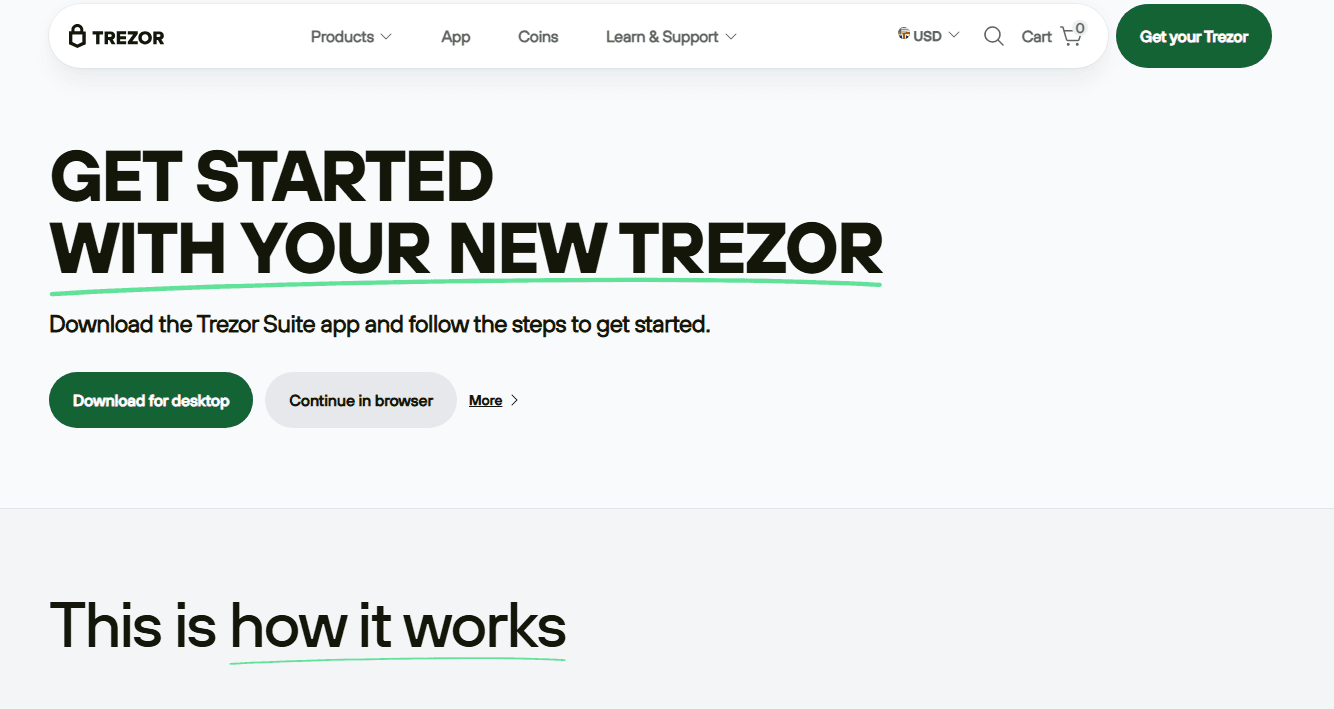
Trezor.io/start – A Complete 1200-Word Beginner’s Guide to Setting Up Your Trezor Hardware Wallet
If you're stepping into the world of cryptocurrency, one of the smartest steps you can take is securing your digital wealth with a hardware wallet. Trezor, developed by SatoshiLabs, is among the most reputable hardware wallets available today. Whether you choose the Trezor One or the Trezor Model T, your setup process begins at the official onboarding page: Trezor.io/start.
This page is designed to walk new users through the setup process safely and correctly. But understanding each step clearly—and knowing why it matters—is essential to keeping your crypto protected. This comprehensive guide explains everything you need to know about using Trezor.io/start, including initial setup, recovery seed creation, security recommendations, device management, and troubleshooting.
1. What Does Trezor.io/start Do?
Trezor.io/start is the trusted starting point for new Trezor wallet users. When you visit this page, you are guided through:
Downloading and installing Trezor Suite
Initiating your hardware wallet for the first time
Setting a secure PIN
Creating and backing up your recovery seed
Understanding basic wallet operations
This page ensures that you configure your device securely and avoid counterfeit sites or malicious downloads. Beginning at the official site is crucial because hardware wallet phishing attacks are widespread in the crypto world.
2. Getting Ready: What You Need Before Setup
Before visiting Trezor.io/start and setting up your wallet, make sure you have the following items ready:
✔ Your Trezor Device
Either the Trezor One (button interface) or the Model T (touchscreen).
✔ A Compatible Computer
Windows, macOS, Linux — or Android if you plan to use Trezor with mobile.
✔ A Stable Internet Connection
Preferably a private Wi-Fi network or wired connection.
✔ A USB Cable
Use the original cable or one capable of data transfer.
✔ Pen & Paper
Important for storing your recovery seed securely.
With these essentials ready, you're prepared to begin the setup process.
3. Step-by-Step Guide to Using Trezor.io/start
Step 1: Visit the Official Setup Page
Open your browser and type Trezor.io/start manually.
Because phishing is common in crypto, avoid clicking random links.
Once on the page, you’ll see setup options for both Trezor devices. Select the model you purchased to continue.
Step 2: Download Trezor Suite
Trezor Suite is the official application that interacts with your hardware wallet. You’ll use it to:
Send and receive crypto
Track your portfolio
Manage accounts
Update firmware
Change security settings
From Trezor.io/start:
Select your operating system.
Download the Trezor Suite installer.
Complete installation and open the program.
This software is crucial for securely managing your assets.
Step 3: Connect Your Trezor Hardware Wallet
With Trezor Suite open:
Plug in your Trezor device using the USB cable.
Trezor Suite will automatically detect it.
Follow the on-screen prompts.
The Model T may show different options on its touchscreen, while the Trezor One uses its buttons for navigation.
Step 4: Install Firmware (If Needed)
Brand new Trezor devices are shipped without firmware to prevent tampering.
When prompted:
Click Install Firmware
Verify that the firmware version is signed and authentic
Wait for installation to complete
Never install firmware from unofficial sources.
Step 5: Create Your New Wallet
Inside Trezor Suite, choose:
👉 Create a new wallet
The wallet on your Trezor device is generated offline, which protects it from online attacks.
Once the wallet is created, you’ll move on to the critical step: recording your recovery seed.
Step 6: Backup Your Recovery Seed Securely
Your Trezor will display a series of words — known as the recovery seed or seed phrase.
This seed phrase is the master key to your cryptocurrency wallet.
Important rules:
Write it down by hand — never type it into a phone or computer.
Keep the recovery card in a safe, private location.
Never share it with anyone.
Never upload it to cloud storage.
Never photograph it.
Anyone with this seed can access your wallet, even without your Trezor device.
The Trezor will also make you verify the seed to ensure you wrote it down correctly.
Step 7: Set Your PIN
A PIN protects your device from unauthorized access.
Guidelines for creating a PIN:
Avoid simple combinations like 1111 or 1234.
Use at least 5–6 digits.
Write it down temporarily if needed, but don’t store it near your device.
Memorize it once you are comfortable.
The Trezor One uses scrambled PIN entry on the computer to prevent phishing.
The Model T uses its touchscreen for PIN entry, improving usability.
4. Using Trezor Suite After Setup
Once your device is configured, Trezor Suite becomes your main dashboard for interacting with your crypto holdings. Let’s explore what you can do next.
Add Cryptocurrency Accounts
Each currency — Bitcoin, Ethereum, Litecoin, etc. — requires a separate account in Trezor Suite.
After setup:
Click Add Account
Select the cryptocurrency
Let your Trezor confirm it
This step allows you to organize your crypto assets within a single interface.
Sending Cryptocurrency
To send crypto:
Connect your Trezor
Open Trezor Suite
Navigate to Send
Enter the recipient’s address
Confirm details on your Trezor device
The final confirmation on the hardware device protects you from malware and phishing attempts.
Receiving Cryptocurrency
When someone sends you crypto:
Select Receive
View your address
Always verify the receiving address on your Trezor device
This ensures it has not been altered by malware.
Portfolio Tracking
Trezor Suite displays:
Wallet balance
Value changes
Transaction history
Separate coin accounts
This gives you a clear overview of your holdings.
5. Security Features You Should Enable
Trezor.io/start only covers the basics. After setup, consider enabling advanced features for additional protection.
Passphrase Protection
A passphrase adds a “hidden” wallet layer.
It acts like a 25th word added to your seed.
Without the passphrase, the hidden wallet cannot be accessed.
It offers protection even if someone steals your recovery seed.
Regular Firmware Updates
Updates include:
Bug fixes
Patches
New coin support
Security enhancements
Always update via Trezor Suite only.
Use a Safe Storage Method for Seeds
Your recovery seed can be stored using:
Fireproof safes
Steel seed backup plates
Secure vaults
Never leave it exposed.
6. Common Problems and How to Fix Them
Device Won’t Connect
Try a different USB cable
Switch USB ports
Restart the Trezor Suite application
PIN Forgotten
You will need to reset the device and restore it using your recovery seed.
Seed Phrase Lost
If the seed phrase is lost and your device fails, access to your crypto is permanently lost.
There is no reset, no recovery, and no support can restore it.
Firmware Update Stuck
Disconnect the device
Reconnect in bootloader mode
Try again through Trezor Suite
7. Best Practices After Using Trezor.io/start
Keep your recovery seed offline and hidden
Never search “Trezor login” online — only use the app
Do not install browser extensions claiming to be Trezor tools
Use only official links and downloads
Always verify addresses on the device screen
Avoid sharing your device with others
Following these habits ensures long-term crypto safety.
Conclusion
Trezor.io/start provides a secure and structured path to setting up your Trezor hardware wallet properly. By following the guided steps — downloading Trezor Suite, installing firmware, creating your wallet, recording your recovery seed, and setting your PIN — you establish a strong foundation for safeguarding your cryptocurrency.
Once configured, the Trezor device becomes your secure gateway to managing, sending, receiving, and monitoring your digital assets. With proper care, cautious security habits, and regular firmware updates, your Trezor wallet will provide powerful protection for years to come.